A VP of Marketing at a mid-market SaaS company needs to evaluate marketing automation platforms. Her team has budget for a new stack by end of quarter. Five years ago she would have Googled “best marketing automation software,” opened four tabs, and built a shortlist from G2 and a couple of analyst pieces.
Today she opens ChatGPT. “I’m running marketing at a 200-person B2B SaaS company, ICP is mid-market ops teams, we’re on HubSpot Pro and outgrowing it. What platforms should I seriously evaluate, and where do they sit on the tradeoff between power and usability?” ChatGPT gives her six names with reasoned tradeoffs. She takes the shortlist to her team. Those six vendors get demos. The rest don’t exist for this decision cycle.
If your brand isn’t on that shortlist, you’re not in her consideration set — no matter how well your category pages rank on Google. This is the structural shift B2B SaaS marketers are walking into, and it’s why GEO (Generative Engine Optimisation) is becoming a line item in serious SaaS marketing plans rather than a curiosity.
Why B2B SaaS Is a GEO-Critical Category
Not every vertical needs to invest aggressively in LLM visibility right now. B2B SaaS does, for reasons tied to how the category actually gets evaluated.
SaaS purchases are high-consideration. ACVs from SGD 20,000 to several hundred thousand mean buyers research seriously. The buying committee reads analyst reports, scans G2 reviews, watches demos, runs trials, compares pricing — the evaluation cycle stretches across weeks or months, and the earliest step (shortlist formation) disproportionately shapes the outcome. Whoever gets into the initial set of vendors-worth-evaluating has enormous structural advantage.
LLMs have inserted themselves into that earliest step. Decision-makers increasingly use ChatGPT, Claude, and Perplexity as a faster substitute for the initial category-scan they used to do in Google. It’s not about replacing demos or analyst calls; it’s about replacing the “what’s out there?” research phase. And that’s the phase where shortlists are formed.
The specific traits that make SaaS vulnerable here: category ambiguity (is Gong a conversation intelligence tool or a revenue intelligence platform?), fast-moving competitive landscapes (new entrants launch quarterly), heavy reliance on third-party validation (analysts, reviews, comparison content), and buyer personas — heads of marketing, RevOps, product, engineering — who are already deeply AI-fluent and using LLMs daily for other work. They don’t hesitate to use them for vendor research.
If you run SaaS marketing and you’re not tracking how ChatGPT and Claude describe your category when asked, you have a visibility blind spot that Google Analytics will never show you. Our SaaS SEO services brief now includes LLM visibility baselining by default for exactly this reason.
Citation Patterns: What SaaS Brands That Get Recommended Share
We’ve spent the past eighteen months sampling LLM responses across SaaS categories — asking ChatGPT, Claude, Gemini, and Perplexity variations of “best X for Y” queries, category-overview questions, and competitor-comparison prompts. The brands consistently cited across multiple LLMs and multiple phrasings share observable traits. None of these are secret. Most of them are annoying to build.
Strong review aggregator presence. G2, Capterra, TrustRadius, GetApp. Not just listings, but substantial review volume with recent recency, named reviewer job titles, and consistent 4.3+ averages. Review aggregators are heavily weighted in LLM training corpora and real-time retrieval because they’re structured, dense with named entities, and updated regularly. Brands with fifty recent G2 reviews consistently outperform brands with fifteen — even when the latter has better product.
Substantive comparison content. “Your-brand vs competitor” pages that actually compare, not just marketing copy dressed up as comparison. The pages that get cited are the ones with feature-by-feature tables, honest acknowledgement of where the competitor wins, pricing transparency, and named decision criteria. LLMs pattern-match to structured comparisons and will often quote or paraphrase them directly.
Named-author thought leadership. Not “From the Gong Team” — named individuals with visible credentials and consistent publication cadence. Devin Reed at Clari, Kyle Poyar at OpenView, Emily Kramer at MKT1. LLMs increasingly treat individual authors as authoritative entities, and SaaS companies that elevate named voices get cited as extensions of those voices.
Mentions in authoritative industry publications. Not press-release-wire syndication. We’re talking The Information, Protocol (rest in peace), SaaStr, First Round Review, Stratechery, trade publications specific to the buyer vertical. Coverage in publications LLMs treat as high-signal. Our digital PR services work for SaaS clients is explicitly about this kind of editorial presence, not link volume.
Wikipedia presence where warranted. Not every SaaS company qualifies, but those that legitimately meet notability standards and have clean, sourced Wikipedia articles get substantially better LLM representation. Wikipedia is weighted heavily in LLM training data.
Podcast and conference presence captured in transcripts. SaaS founders and execs who go on Lenny’s Podcast, 20VC, The Official SaaStr Podcast, Acquired, etc. — and whose episodes get transcribed — build entity associations LLMs pick up. Spoken content is a large and growing share of what LLMs ingest.
Founder and exec visibility. Companies where the founder or a senior exec has genuine public presence (LinkedIn thought leadership, conference talks, publishing) correlate strongly with brand citation. The person becomes a vector for the brand.
The Five-Layer Foundation
Translating those observable patterns into a structured programme, here’s how we think about the stack for a SaaS GEO engagement:
Layer 1 — Entity clarity. Is your company’s category positioning unambiguous? Wikidata entry correct? Schema.org Organisation and SoftwareApplication markup complete? Crunchbase profile accurate with funding and leadership data? Knowledge graph presence cleaned up? This is the boring structured-data layer that many SaaS companies skip because it doesn’t feel like marketing. It is, and LLMs ingest it heavily.
Layer 2 — Review aggregator presence. G2, Capterra, TrustRadius, Software Advice. Ongoing review solicitation programme (not a one-time push), category placement in the right G2 grids, response to negative reviews, category education content on these platforms where they allow it. This is probably the single highest-leverage layer for most SaaS companies because the effort is concentrated and the impact shows up across every LLM that ingests review data.
Layer 3 — Comparison and category content. Your-brand-vs-competitor pages, category overview content, buyer’s guides. Published on your own domain with proper structured data, plus earned placement on third-party comparison sites. See content marketing services and B2B copywriting services for how we approach this content.
Layer 4 — Authoritative editorial coverage. Sustained presence in the publications LLMs treat as high-signal for your category. This is digital PR work — expert quoting, contributed pieces, data-led stories that get picked up, executive commentary in business and trade press.
Layer 5 — Technical documentation and API references. Often overlooked: SaaS companies with substantive public docs, API references, and developer resources get cited in technical queries where LLMs need to show specifics. Your public docs are training data. Treat them as brand surface area, not internal clutter.
Each layer compounds with the others. Review aggregator presence without editorial coverage underperforms. Editorial coverage without entity clarity gets misattributed. The stack matters.
The Integration Review Trap
A temptation worth naming. The web is flooding with “Top 10 Best X for Y” listicles — affiliate-driven content farms, review sites of varying quality, sponsored rankings. It’s tempting to chase placement on all of them because the content explicitly lists vendors and LLMs do sometimes surface these pages.
Being on those lists helps less than you’d think. LLMs have gotten better at recognising low-signal listicle content, especially affiliate-driven pages with transparent commercial intent. When ChatGPT generates a shortlist, it’s not copying one listicle — it’s synthesising across a much wider corpus, and listicles are discounted relative to editorial coverage, named-author analysis, and substantive reviews.
What helps more: being mentioned in the underlying review and analysis content that the listicles are (loosely) derivative of. The named-analyst writeup. The founder’s deep-dive on LinkedIn. The podcast episode where a respected operator explains why they chose you. That content carries more LLM weight and also gets cited by the listicles themselves, creating the same placement plus deeper entity reinforcement.
Spend less effort on placement-in-listicles. Spend more on being the brand that shows up in the editorial layer those listicles borrow from.
A Practical 6-9 Month Roadmap for Early-Stage SaaS
If you’re at Series A or B with limited GEO budget and need to sequence this, here’s how we’d typically phase an engagement. Caveat that every brand is different and this is a template, not a prescription.
Months 1-2 — Baseline and entity. Sample LLM responses across your category and priority queries. Audit Wikidata, schema, Crunchbase, Knowledge Graph. Clean up inconsistencies. Get foundational structured data right. Launch a G2/Capterra review-solicitation programme if one isn’t running. This phase is unglamorous and high-ROI.
Months 2-4 — Comparison content and category positioning. Build proper your-brand-vs-competitor pages for the top five competitors you lose deals against. Publish a substantive category overview piece (buyer’s guide, category definition, framework post). Get founder/exec LinkedIn cadence consistent. Start pitching podcast appearances.
Months 4-6 — Authoritative coverage. Digital PR programme targeting tier-1 publications in your category. Expert quoting via platforms like Featured.com/Qwoted. Data-led story production (customer survey, proprietary benchmark, state-of-industry report). First wave of named-author thought leadership published.
Months 6-9 — Compounding and iteration. Second wave of earned coverage. Monthly LLM visibility monitoring shows early movement. Refine which queries you’re winning and which you’re not. Double down on what’s working. Start measuring assisted pipeline influence where GA4 and attribution tools allow.
Nine months is realistic for early-stage brands to see meaningful LLM visibility movement from near-zero. Established brands with stronger foundations see movement faster. Brand recognition in LLM training corpora compounds over 18-36 months — so the long game is a long game, but the shorter-term real-time retrieval wins are accessible earlier.
Measurement: What You Can Actually Track
Honest caveat first — GEO measurement is the most immature part of the practice, as noted in our broader take on generative engine optimisation services.
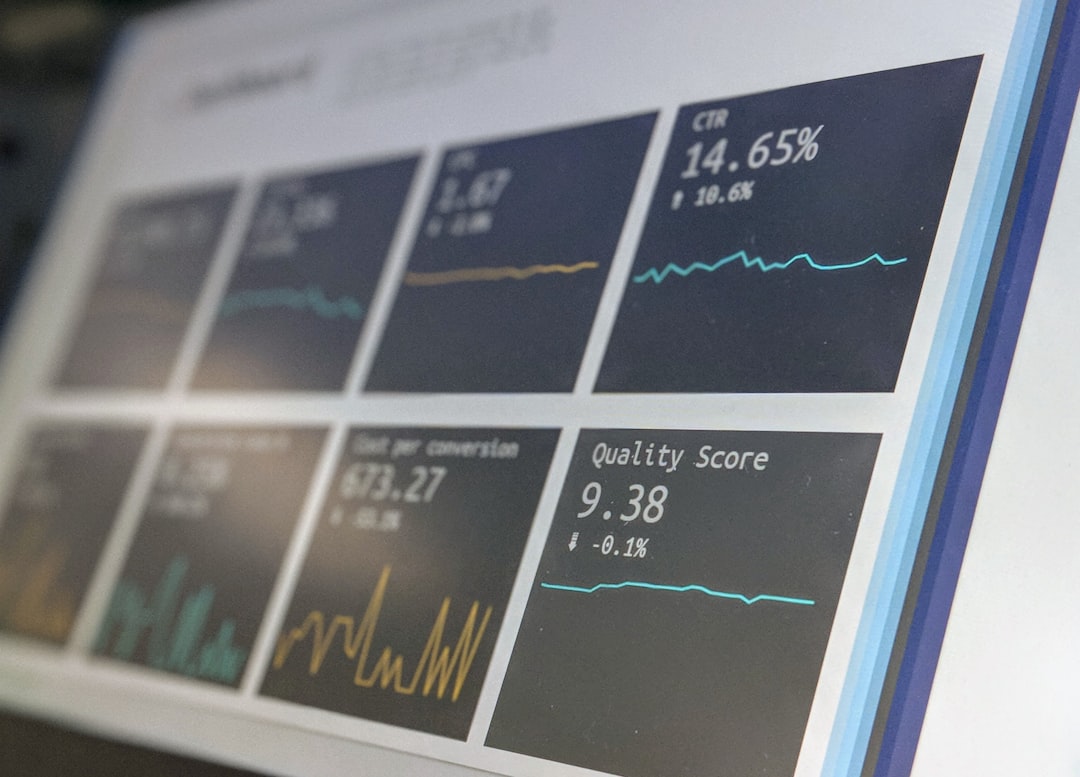
What we track for SaaS clients:
- Brand mention frequency across LLMs — manual sampling of priority queries across ChatGPT, Claude, Gemini, Perplexity, plus increasingly specialist tools (Profound, Otterly, Peec AI, etc.). Monthly cadence. We track both mention presence and sentiment/accuracy of how you’re described.
- Competitor share of voice — same queries, measured against your top three to five competitors. Directional but useful.
- Citation of owned content — which of your pages LLMs surface as sources when answering category questions.
- AI-referral traffic in GA4 — ChatGPT, Claude, Perplexity referrers, filtered through a custom segment. Small volumes typically, but growing, and very high intent.
- Assisted pipeline signals — where sales qualification data lets us, we tag demo requests whose prospect mentioned an LLM as part of their research. This is manual and imperfect, but it tells us whether the visibility work is generating evaluation-stage mentions.
None of this is as clean as “keyword #3 ranking.” Don’t expect it to be. If your reporting culture requires precise attribution, calibrate expectations before starting a GEO programme or pair it with AEO services and traditional SEO where measurement is more mature. Our primer on what AEO is covers the measurement contrast in more depth.
What GEO Engagements Cost for SaaS
Standalone GEO engagements at our boutique run SGD 5,000-15,000 per month, depending on depth. For most SaaS clients, GEO is integrated into a broader retainer that includes SEO and digital PR, which lands in the SGD 8,000-15,000 monthly range.
Discrete project work — GEO audit, entity foundation rebuild, initial comparison content production — runs SGD 8,000-25,000 as a defined scope.
What you shouldn’t pay for: anyone guaranteeing you’ll appear in ChatGPT responses. LLM behaviour is not deterministic, and guaranteed citation is overpromising. What you should pay for: defensible strategy, transparent reasoning about what we’re doing and why, honest monthly reporting on observed visibility patterns.
FAQ — GEO for B2B SaaS
How is GEO different for SaaS vs other industries?
SaaS is more citation-dependent than most verticals because buyers research heavily across third-party sources — review sites, analyst content, peer recommendations, comparison pages. LLMs pattern-match well to those exact sources. The work overlaps with GEO for other industries (entity foundation, editorial coverage, structured data) but the emphasis on review aggregators and comparison content is heavier in SaaS than in, say, medical or local services.
Does G2 presence matter for GEO?
Meaningfully, yes. G2, Capterra, and TrustRadius are heavily weighted in LLM training data because they’re structured, named-reviewer-dense, regularly updated, and category-organised. SaaS brands with substantial recent review volume consistently outperform brands without it in LLM shortlist queries. A sustained review-solicitation programme is probably the highest-leverage single activity for most SaaS companies starting GEO.
Should I write comparison content (your-brand vs competitor)?
Yes, if you do it properly. Real feature-by-feature comparison with honest tradeoffs, named decision criteria, pricing transparency, and clear structure. LLMs cite these heavily. Marketing-copy “comparisons” that don’t actually compare get discounted. If you feel uncomfortable writing honestly about where competitors beat you, that discomfort is a signal your comparison page will underperform.
How long before GEO affects pipeline?
Real-time retrieval visibility (LLMs browsing the web during responses) can shift within 3-6 months of substantive work. Training-data-based visibility compounds over 12-24 months as new model versions release. Pipeline impact typically lags visibility by a quarter or two because evaluation cycles are long. Nine to twelve months is a reasonable window to evaluate a GEO programme’s commercial return for SaaS.
Can I track GEO-attributed demos?
Partially. GA4 will show AI-referral traffic from ChatGPT, Claude, Perplexity. Sales qualification questionnaires can capture “how did you hear about us” mentions of LLMs. Assisted-conversion modelling can surface patterns. You won’t get clean last-click attribution for LLM visibility — the measurement infrastructure isn’t there yet. Treat GEO attribution as directional.
What’s the biggest GEO mistake SaaS companies make?
Treating it as a content production exercise. The highest-leverage work is often entity foundation (structured data, Wikidata, Crunchbase cleanup, review aggregator presence) and earned coverage — not more blog posts. Companies that throw content at GEO without fixing the foundation underperform companies that fix the foundation and produce less content. The stack matters.
Is GEO worth it if my SaaS is pre-Series A?
Probably not as a dedicated spend. Get product-market fit, get initial G2 reviews, get your basic entity data right, focus on SEO fundamentals and a few high-leverage PR wins. GEO as a structured programme makes more sense from Series A onwards when category positioning stabilises and the ICP is clear enough to target specific LLM query patterns.
Should I prioritise GEO over traditional SaaS SEO?
No. Traditional search still drives majority of B2B SaaS discovery and will for years. GEO is additive — it captures the emerging surface while SEO captures the dominant channel. Our SaaS SEO services build both in parallel, with GEO integrated rather than separate. Treating them as alternatives misreads the current market.
Discuss GEO Strategy for Your SaaS
If you’re running marketing at a B2B SaaS company and noticing that decision-makers in your category are using ChatGPT or Claude for vendor research — and you want to be on the shortlist rather than off it — let’s talk.
Book a free 30-minute consultation or email [email protected]. We’ll sample LLM responses for your category, flag where you’re showing up (or not), and give you an honest read on what a GEO programme would involve for your specific situation.
Related Reading
- GEO Services — our full generative engine optimisation service overview
- SaaS SEO Services — SEO and GEO programme for B2B SaaS specifically
- AEO Services — answer engine optimisation for AI Overviews and Perplexity
- Digital PR Services — authority building that feeds LLM training data
- What Is AEO? — primer on answer engine optimisation
- Generative Engine Optimization Services — broader GEO context and measurement