

Personal training in Singapore is a crowded, mostly solo-practitioner market. Thousands of certified trainers work across commercial gyms, boutique studios, client homes, and outdoor locations. Most of them acquire clients through a mix of gym floor walk-ins, referrals, and Instagram presence. SEO is rarely the primary channel — but for the trainers who build it deliberately, it becomes the most compounding long-term asset they have.
The trainers who win on SEO tend to share a few characteristics. They specialise clearly. They produce content from genuine expertise rather than recycled fitness platitudes. They integrate their Instagram or TikTok presence with a proper website. And they treat their personal brand as a searchable entity, not just a social handle.
This guide covers SEO for personal trainers, fitness coaches, online coaches, and small training studios in Singapore, including the specific patterns that distinguish trainers who build sustainable inbound pipeline from those who grind on outbound acquisition indefinitely.
Why Most PT Websites Rank for Nothing
Walk through any ten Singapore personal trainer websites and you will typically see the same structure. A home page with a hero shot and generic copy about “transforming your body.” An About page with certification names. A Services page listing 1:1, group training, and online coaching. A contact form. Maybe a blog with three posts from 2019.
This structure ranks for almost nothing because it serves almost no specific search intent. “Personal trainer Singapore” has thousands of monthly searches, but it is a commercial head term dominated by ActiveSG listings, large chains, and trainer directories. Individual trainers rarely break into the top 10 on it — and even when they do, the click-through is low because users expect a directory result.
The trainers who actually rank successfully do so on more specific queries. “Postnatal trainer Singapore,” “strength coach for masters athletes Singapore,” “home-visit personal trainer East Coast,” “pre-rehab trainer for runners.” These specific queries have lower individual volume but much higher intent, less competition, and convert far better. The SEO strategy shift is from “rank for PT Singapore” to “be the obvious choice for a specific kind of client with a specific need.”
Our SEO for small business Singapore guide covers the specificity principle in more depth.
Niche Specialisation for Trainers
Effective PT niches typically fall along one or more of these axes:
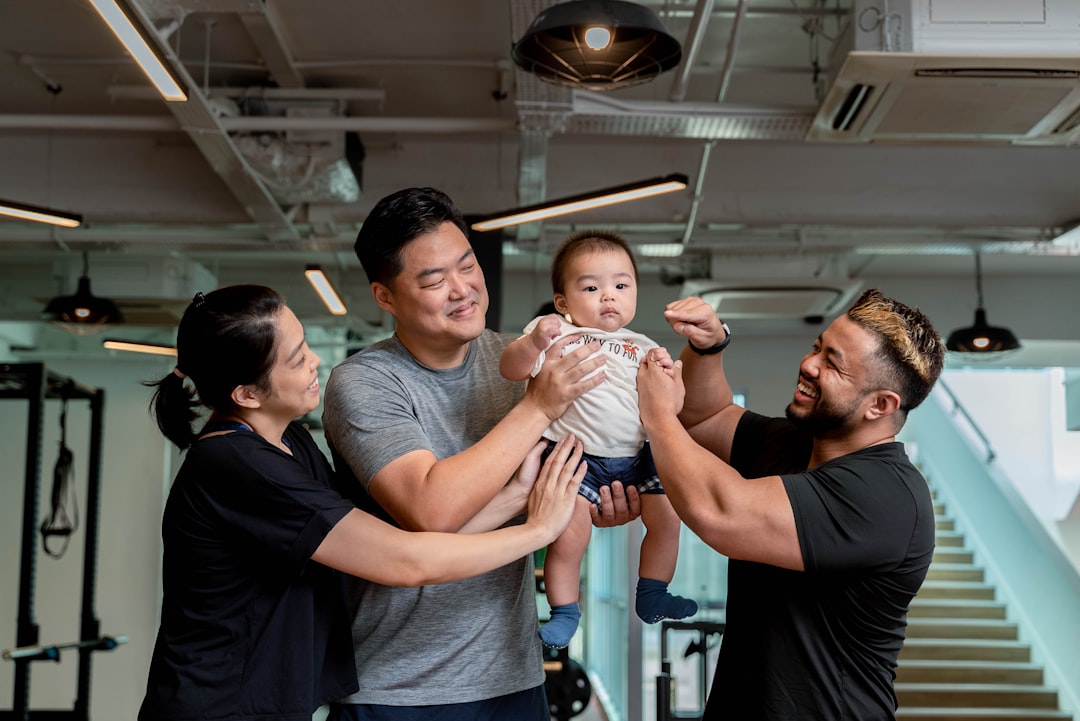
Population niche. Pre/postnatal training, masters (50+) strength training, youth athletes, bariatric and post-surgery clients, corporate executives, wheelchair users, cancer survivors.
Goal niche. Weight loss, strength and muscle gain, powerlifting meet preparation, marathon and endurance prep, mobility and injury prevention, return to sport after injury.
Modality niche. Kettlebell-only, bodyweight and calisthenics, Olympic weightlifting, boxing conditioning, functional movement, Pilates-strength hybrid.
Location niche. Home-visit trainer in specific neighbourhoods, outdoor park training, specific-gym-affiliated trainer, studio-based.
The trainers who commit to a clear niche produce content that actually ranks for that niche. A trainer specialising in postnatal clients publishes articles on diastasis recti, pelvic floor rehabilitation, postnatal weight loss pacing, and returning to running safely. That trainer, over 12-18 months, owns those search results locally and builds a pipeline of inbound postnatal client enquiries.
A trainer trying to be “everything for everyone” produces generic content that ranks for nothing.
Location-Specific Positioning
Personal training is geographically bounded. Clients rarely travel more than 15-20 minutes for sessions. Location matters to SEO.
Home-visit trainers benefit from clear neighbourhood-area positioning. Content like “home personal trainer East Coast,” “trainer who visits Marine Parade,” or “home PT CBD” captures specific geographic demand. List the neighbourhoods you actually serve with realistic travel coverage; do not claim full island coverage if you cannot deliver it well.
Gym-affiliated trainers benefit from association with their gym’s location in content — though commercial gym trainers should check their gym’s external marketing policies. Most gyms permit individual trainers to market themselves externally; a few restrict it.
Outdoor trainers have specific opportunities around park-associated positioning — East Coast Park, Botanic Gardens, Marina Barrage — and morning-session timing content.
Studio owners benefit from standard local SEO treatment similar to broader fitness and wellness studios. Our local SEO services page covers the standard approach.
Instagram-SEO Synergy
Personal trainer discovery in Singapore runs heavily through Instagram. The trainers who build sustainable practices typically run integrated Instagram + SEO strategies rather than either in isolation.
Instagram drives top-of-funnel discovery — a prospect sees a coaching clip, follows the trainer, watches for a few weeks, then converts. SEO captures the mid-funnel research — a prospect Googles the trainer’s name, reads their website, checks testimonials, books an intro session.
The integration patterns that work:
- Instagram handle used as a search-worthy personal brand name
- Website optimised for the trainer’s name (personal brand SEO)
- Content themes consistent across Instagram posts and website articles
- Client transformation content (with permission) on both platforms
- Lead magnets on Instagram driving to gated website content that captures email
Trainers who have only Instagram face a platform-dependence risk — an algorithm change, a policy issue, or a hacked account can erase their pipeline overnight. Trainers who balance Instagram with a website and email list insulate their practice. SEO is part of that insulation.
Content That Actually Drives PT Enquiries
The content categories that produce measurable results for Singapore personal trainers:
Condition and goal-specific content
“How to lose 10kg after pregnancy in Singapore.” “Strength training after a knee replacement.” “Getting back to running after a stress fracture.” These articles rank for specific-situation queries where a prospect is actively looking for help with a defined problem.
Programme design transparency
Walking through how you structure a 12-week fat loss programme, a strength-building microcycle, or a return-to-sport protocol signals expertise. Trainers who expose their methodology convert higher than trainers whose programming is a black box.
Success story case studies
With permission, detailed client stories — starting state, programme, key moments, outcome — are the highest-converting content a PT website can host. Transformation photos alone are weaker than narratives with context.
Singapore-specific context
HDB gym availability and equipment guides, ActiveSG facility content, specific park workout locations, local hawker food guides for fitness goals. Singapore-context content has defensible rankings against generic global fitness content.
Pricing Expectations for Personal Trainer SEO
PT SEO investment is usually smaller-scale than other verticals. Typical ranges:
- Solo trainer, starting SEO: SGD 1,500-3,000/month for strategy, name SEO, foundational content, and website basics. This is at the lower edge of viable SEO investment — faster approaches may involve 6-12 month project engagements rather than open-ended retainers.
- Established solo trainer or small studio: SGD 3,000-6,000/month including expanded content production, local SEO, and modest PR.
- Multi-trainer studio or online coaching business: SGD 6,000-12,000/month.
Our affordable SEO services Singapore guide covers minimum-viable approaches for solo operators. Full pricing context in our Singapore SEO cost breakdown.
Honest Acknowledgements
- If your Instagram and referrals fill your calendar, SEO is a lower priority. Start it as a long-term compounding investment, not a quick-fix pipeline solution.
- Generic fitness content generated by AI or outsourced to general writers will not rank. PT content requires genuine coaching experience in the voice.
- Hard transformation claims without substantiation (“lose 10kg in 6 weeks guaranteed”) invite both ASAS advertising compliance issues and user backlash when outcomes don’t match.
- Online coaching businesses have different SEO economics than in-person — they compete globally, which raises the bar, but also remove geographic constraints that limit in-person practices.
FAQ — Personal Trainer SEO Singapore
How long before SEO produces PT client enquiries?
For trainers with a clear niche, 4-8 months to first inbound enquiries. Without niche clarity, expect 12+ months or longer. Specificity dramatically speeds the timeline.
Should I focus on Instagram or SEO first?
Instagram produces faster discovery in Singapore; SEO compounds more durably over time. For most trainers, Instagram first to establish brand, then SEO layered in as revenue stabilises. Both matter eventually.
Can I rank without a website?
Partially. Google Business Profile (if you operate as a business from an address or service area), LinkedIn, and strong social profiles produce some name-search results. But a site remains the strongest conversion surface.
Do I need a blog as a solo PT?
Yes, if you want SEO to work. 1-2 quality articles per month over 12-18 months is the minimum for meaningful ranking. Less than that, traffic stays flat.
What about free workout content — does giving it away hurt paid coaching conversions?
No. Free content demonstrates expertise and builds trust. The clients who pay for coaching do so for accountability, personalisation, and guidance — not for exercise information, which is freely available everywhere regardless.
Should I use fitness directories?
Low effort, modest benefit. Claim major ones (Yelp, Facebook, local fitness directories) for citation consistency. Don’t build strategy around them.
Is AI-written content risky for fitness?
Yes, unless heavily edited. Generic AI fitness content is everywhere and ranks for nothing distinctive. Your expertise and voice are the differentiator — delegate that to AI and the content loses what made it worth publishing.
How do I handle client testimonials for SEO?
Collect them systematically. Full testimonials with context (client name with permission, starting state, outcome, duration) outperform short quotes. Video testimonials convert higher than text, though both rank.
Discuss Your Personal Trainer SEO Strategy
If you are a personal trainer or fitness coach in Singapore and want a substantive conversation about personal brand SEO, niche positioning, or content strategy, reach out.
Book a free 30-minute consultation or email [email protected].
Related Reading
- SEO for Small Business Singapore — solo practitioner patterns
- Local SEO Services — location-specific SEO foundations
- Affordable SEO Services Singapore — options for solo trainers
- SEO Copywriting Services — coaching-voice content production
- How Much Does SEO Cost in Singapore — pricing context
- Complete Guide to SEO in Singapore — pillar overview