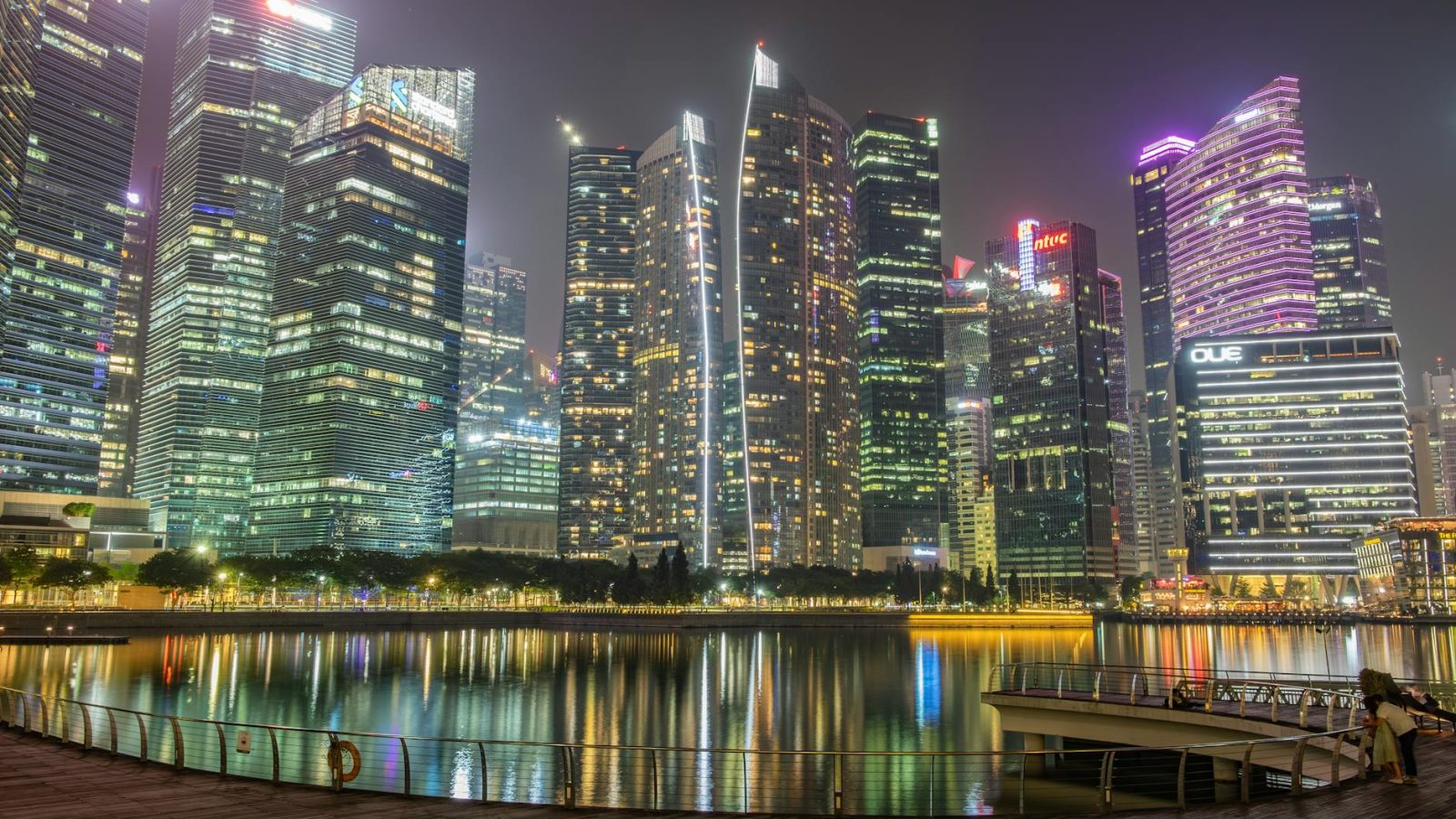
Search in Singapore is its own discipline. Compact geographic market with fierce competitive intensity. Multilingual population with meaningful search volume across English, Mandarin, Malay, and Tamil. High mobile penetration combined with one of the world’s highest Google usage rates. An AI-accelerating search landscape reshaping how organic visibility is earned.
This guide is the definitive, strategically-complete resource on SEO in Singapore for 2026 — built for business owners, marketing leaders, and anyone serious about making organic search a real commercial channel for their business.
We’ll cover strategy, technical foundations, content, local SEO, the emerging AEO and GEO disciplines, authority building, pricing, how to evaluate providers, and the specific Singapore-market dynamics that shape what actually works here.
What’s Different About SEO in Singapore
Three factors genuinely distinguish Singapore SEO from generic SEO playbooks:
Compact geographic market, fierce competition. Singapore’s entire market is ~5.9 million people in a single dense urban zone. Commercial verticals — financial services, medical, legal, education, real estate, professional services — compete aggressively for limited customer pools. The competitive intensity in many Singapore verticals is disproportionate to the market size.
Multilingual search behaviour. Significant search volume exists in English, Mandarin, Malay, and Tamil for various categories. Generic English-only SEO leaves substantial traffic on the table in food, lifestyle, beauty, healthcare, and certain retail categories. Multilingual SEO strategy is a genuine differentiator here.
Mobile-first commercial behaviour. Singapore has among the highest mobile internet penetration globally. Most commercial searches — property, F&B, healthcare, retail — happen mobile-first. Mobile-UX-and-performance-first SEO isn’t optional.
Add to this the 2026 realities every SEO market faces — AI Overviews on Google, the rise of answer engines (Perplexity, ChatGPT Search), Google’s aggressive deprioritisation of generic content, Core Web Vitals as a structural ranking factor — and Singapore SEO requires a specific approach calibrated to both local dynamics and the shifting broader landscape.
The Five Dimensions of SEO That Matter in Singapore
Effective SEO in any market, and particularly in Singapore’s competitive landscape, operates across five dimensions. Weak performance on any of them constrains outcomes on all the others.

1. Strategic SEO Foundation
Strategy comes before tactics. Before any content gets written or any backlink gets acquired, successful SEO programmes require strategic alignment on:
- What winning looks like — organic-driven leads, revenue, market position, brand visibility
- Where SEO realistically fits — SEO is the right channel for some businesses and wrong for others
- Which keywords matter commercially — not all traffic is equal; commercial-intent traffic converts 10–20x better than informational traffic
- Competitive positioning — honest assessment of where you can realistically win
- Resource calibration — content production capacity, engineering capacity, budget, time horizon
Businesses that skip strategic foundation work and jump to tactics usually under-perform — they produce content without commercial alignment, optimise keywords without competitive feasibility, and invest in areas that don’t serve their business outcomes.
For strategic depth specifically, see our SEO Consultancy Services page.
2. Technical SEO
Technical SEO is the foundation that determines whether everything else compounds or leaks. If Google can’t crawl your site, can’t render your JavaScript, or can’t load your pages fast enough on a mid-range mobile device, no amount of content or link building recovers it.
Technical SEO priorities for Singapore sites:
Core Web Vitals. Mobile performance is a structural ranking factor. Singapore users expect fast experiences; Google measures Core Web Vitals (LCP, INP, CLS) primarily on mobile. Most sites fail mobile Core Web Vitals while passing desktop.
Crawlability and indexation. XML sitemap health, robots.txt configuration, internal linking architecture, and avoiding common indexation traps (soft 404s, duplicate content, parameter bloat) determine what Google actually sees.
JavaScript rendering. Modern websites built on React, Vue, or Next.js require careful rendering strategy to be SEO-friendly. Most sites built by general web developers without SEO consultation have rendering issues that limit rankings.
Structured data. Schema markup (Organization, LocalBusiness, Product, Service, FAQ, HowTo, Article) signals entity relationships to search engines and qualifies pages for rich SERP features.
International and multilingual handling. For businesses operating across SG + Malaysia/Indonesia/Thailand or across languages, hreflang implementation is the foundation of multi-market SEO.
See our Technical SEO Services page for full technical methodology.
3. On-Page SEO and Content
Content is how you compete. In 2026, the content bar is substantially higher than five years ago:
Search intent matching. Content must precisely match what searchers want — informational, investigative, commercial, transactional, or navigational intent. Mismatch between keyword and content format produces zero rankings regardless of other factors.
Topical depth. Google’s Helpful Content systems aggressively deprioritise thin, generic content. Topical authority — becoming the definitive resource in a subject area — comes from depth, not volume.
EEAT signals. Experience, Expertise, Authoritativeness, Trustworthiness matter particularly for YMYL (Your Money or Your Life) categories like medical, financial, legal.
Commercial conversion path. Traffic that doesn’t convert isn’t successful SEO. On-page optimisation for conversion — clear CTAs, trust signals, relevant calls to action — matters as much as ranking optimisation.
Internal linking architecture. How pages link to each other signals topical relationships to search engines and concentrates authority on commercial priority pages.
See our On-Page SEO Services, Content Marketing Services, and SEO Copywriting Services pages.
4. Local SEO
Most Singapore businesses — single-location service businesses, multi-location practices, retail with physical presence, F&B — depend substantially on local search.
Local SEO operates on different signals than traditional SEO:
Google Business Profile management. The single highest-leverage asset in local SEO. Most businesses run it at 30% of its potential. Category precision, description optimisation, regular posts, photo strategy, Q&A management, and review handling all materially affect Local Pack rankings.
NAP consistency. Name, Address, Phone consistency across directories and citations. Inconsistencies actively suppress rankings.
Local link and citation building. SG-specific directories, local press coverage, community partnerships, and industry-specific platforms build local authority.
Location-specific content. Genuine local content — neighbourhood context, transit accessibility, local case studies — outperforms generic templated location pages.
Review acquisition and management. Review velocity, rating, and response strategy affect both rankings and conversion.
See our Local SEO Services page for detailed methodology.
5. Off-Page SEO and Authority Building
Off-page SEO — backlinks, brand mentions, digital PR — builds the authority signals that separate page 1 from page 5 in competitive verticals.
The 2026 reality: volume-based link building (purchased links, PBNs, mass guest posting) is increasingly penalised by Google. What works durably is earned authority — editorial backlinks from real publications, brand mentions in credible media, expert positioning through speaking and thought leadership.
Off-page strategy in 2026 looks more like PR than traditional link building. See our Off-Page SEO Services and Digital PR Services pages.
The New Frontier — AEO and GEO
Traditional Google search still drives the majority of organic discovery, but search is fragmenting across AI Overviews, Perplexity, ChatGPT Search, Claude, and emerging generative engines. Businesses that adapt win the next decade of organic discovery.
Answer Engine Optimisation (AEO)
AEO optimises content to be cited by AI-powered answer engines — Google’s AI Overviews, Perplexity, ChatGPT Search. Key patterns:
- Clear question-and-answer content structures
- Definition-first paragraphs after each heading
- Factual density and specific claims
- Citation-friendly source attribution
- Schema markup (FAQ, HowTo) that helps AI extract answers
See AEO Services for full methodology.
Generative Engine Optimisation (GEO)
GEO builds brand visibility across large language models — ChatGPT, Claude, Gemini. When decision-makers ask ChatGPT “what are the best [solutions] for [problem]”, the brands mentioned have a compounding visibility advantage.
GEO work involves brand entity foundation (Wikipedia, Wikidata, knowledge graphs), citation-worthy content production, authoritative external coverage, and author entity development.
See GEO Services for detailed methodology.
Singapore-Specific SEO Considerations
Beyond universal SEO principles, Singapore has specific dynamics:

Multilingual SEO. For categories with meaningful non-English search volume (F&B, beauty, lifestyle, healthcare), multilingual content strategy in Mandarin/Malay/Tamil can unlock traffic your English-only competitors miss.
Public transport-based local search. Singapore’s MRT-centric geography means directions and “near X station” searches are common. Location pages optimised for transit proximity outperform generic address-based targeting.
Mall and complex addresses. Many Singapore businesses are inside larger developments (Marina Bay Sands, ION Orchard, etc.). GBP setup and Google Maps pin placement needs specific care.
Regulatory considerations. Medical, financial, legal, and certain lifestyle categories operate under specific advertising regulations affecting what SEO content can say. Generic SEO playbooks don’t account for these.
Regional expansion patterns. Many Singapore businesses eventually expand to Malaysia, Indonesia, Thailand, and broader APAC. Singapore SEO work positioned for regional expansion beats SG-only strategy for growth businesses. See International SEO Services.
SEO by Industry in Singapore
Different industries have substantively different SEO dynamics. Priority considerations:
B2B SaaS and software → product-led growth content, programmatic SEO, comparison/alternative content. See SaaS SEO Services.
E-commerce → category architecture, faceted navigation, product feeds, Google Shopping integration. See E-commerce SEO Services.
Medical and healthcare → EEAT compliance, SMC advertising rules, specialty-specific content. See Medical SEO Services.
Enterprise → multi-stakeholder coordination, legacy technical debt, enterprise audit depth. See Enterprise SEO Services.
Professional services → trust signal prioritisation, local + national hybrid strategies, thought leadership.
SEO Pricing in Singapore
What SEO costs in Singapore in 2026:

- Hourly consulting: SGD 80–450+/hour
- Monthly retainers: SGD 1,500–25,000+/month
- Project-based fees: SGD 3,000–80,000+/project
- Starter packages: SGD 500–2,000/month (local-focused)
See our complete SEO pricing guide for Singapore for tier-by-tier breakdown.
How to Evaluate Singapore SEO Providers
Five questions that surface quality:
- Strategic questions first — do they ask about your business before pitching tactics?
- Honest about limitations — do they name what they won’t or can’t do?
- Specific about methodology — do they explain their approach in depth or rely on positioning?
- Current on 2026 realities — AI Overviews, AEO, GEO, Helpful Content systems?
- Outcome-focused metrics — do they measure commercial impact or vanity metrics?
Resources to dig deeper:
- SEO Expert Singapore: What to Look For
- Best SEO Company in Singapore: Evaluation Framework
- SEO Consultant vs SEO Agency: Which Is Right
DIY Singapore SEO vs Professional
For small businesses evaluating whether to learn SEO themselves or hire professional help:

DIY makes sense when: your business is hyperlocal with minimal competition, budget is genuinely SGD 500/month or below, you have time to learn (6–12 months to reach competence), and your SEO needs are simple (GBP, basic on-page, a few pieces of content).
Professional help is warranted when: your vertical is competitive, strategic decisions carry commercial consequence, you need sustained content velocity, or you need senior expertise you can’t realistically develop internally.
Many businesses take a hybrid approach — learn the fundamentals, handle basic work in-house, engage specialists for strategy and technical depth. Resources:
- SEO Course Singapore: Paid vs Free vs Hiring
- SEO Training Singapore: Self-Taught vs Courses vs On-the-Job
Common Singapore SEO Mistakes
Patterns we see repeatedly:
Buying cheap link packages. “50 high-DR backlinks for SGD 2,000” — purchasing toxic links at scale. Google detects this; you pay in ranking damage later.
AI content at scale without editorial review. Generic AI-generated content is increasingly deprioritised. Using AI to draft + humans to edit works; shipping AI output raw doesn’t.
Templated SEO packages applied across wildly different businesses. A hyperlocal dental practice and a B2B SaaS company both buying “SGD 3,000/month SEO package” from the same provider. Neither gets optimal work.
Ignoring technical foundations. Beautiful content on a technically broken site doesn’t rank. Technical SEO is not optional.
Ranking guarantees. “#1 on Google in 90 days” is either misleading or plans to use risky tactics. No reputable provider guarantees rankings.
Vanity metric reporting. Monthly reports showing traffic growth and keyword count growth, without tying any of it to business outcomes.
How Long Does SEO Take in Singapore?
Realistic timelines:
- Local SEO movement — 2–6 months for noticeable Local Pack progress
- Content-driven rankings — 6–12 months for competitive keywords
- Category authority — 12–24 months for dominant positioning
- Algorithmic recovery — 3–12 months post-remediation, not guaranteed
Businesses needing rapid commercial returns should pair SEO with paid acquisition — SEO compounds slowly but durably; paid delivers faster but resets when spending stops.
Getting Started with SEO in Singapore
A practical starting path for businesses new to serious SEO:
Step 1: Strategic audit. Honest assessment of your current organic position, competitive landscape, and commercial opportunity. A good consultant will do this with you in a free initial conversation before recommending investment.
Step 2: Foundational technical work. Fix crawlability issues, Core Web Vitals, schema implementation, basic on-page optimisation. Until this is done, content and link investments don’t compound.
Step 3: Keyword strategy and content roadmap. Prioritised keyword targets mapped to buyer journey stages, with content calendar calibrated to your production capacity.
Step 4: Execute consistently. SEO rewards sustained effort, not bursts. Commit to 12+ months of consistent execution before evaluating programme success.
Step 5: Measure commercial outcomes. Track what affects your business — organic-driven leads, revenue, pipeline — not just rankings and traffic.
FAQ — SEO in Singapore
What is SEO in Singapore? SEO (Search Engine Optimisation) in Singapore is the practice of improving your website’s visibility in Google (and increasingly AI Overviews, Perplexity, ChatGPT) for Singapore-market searches. Effective SG SEO requires understanding local search behaviour, multilingual considerations, mobile-first patterns, and Singapore’s competitive commercial verticals.
How much does SEO cost in Singapore? Typical ranges: SGD 1,500–25,000+/month for retainers, SGD 3,000–80,000+/project for one-time engagements. See our complete SEO pricing guide for detailed tier breakdown.
How long does SEO take to work in Singapore? Local SEO improvements in 2–6 months. Content-driven rankings in 6–12 months. Category authority in 12–24 months. Singapore’s competitive verticals require full-year commitment for meaningful commercial outcomes.
Should I hire an SEO consultant or agency in Singapore? Depends on needs. See SEO Consultant vs SEO Agency for a decision framework. Generally: strategic needs favour consultants, execution-volume needs favour agencies.
Is SEO still relevant in 2026 with AI Overviews and ChatGPT? Yes. Traditional Google search still drives the majority of organic discovery. AI Overviews and answer engines are additive — capturing emerging visibility alongside traditional SEO. Businesses optimising for both (via AEO and GEO) gain compounding advantage.
Can small businesses afford SEO in Singapore? Scaled appropriately — yes. Hyperlocal businesses may need only SGD 500–1,500/month for basic local SEO. Growth-focused SMBs typically need SGD 3,000+/month for meaningful commercial outcomes.
What’s the difference between SEO, AEO, and GEO? SEO = optimising for traditional Google search rankings. AEO = optimising for AI-generated answers (Google AI Overviews, Perplexity, ChatGPT Search). GEO = broader brand visibility across generative AI engines and LLM-mediated discovery. All three overlap and all three matter in 2026.
Do I need multilingual SEO in Singapore? For categories with meaningful non-English search volume (F&B, beauty, lifestyle, healthcare, certain retail), yes. For most B2B and professional services, English is sufficient. Depends on your target audience.
How do I know if my current SEO is working? Measure commercial outcomes — qualified leads from organic, organic-attributed pipeline, Local Pack rankings for priority keywords, conversion rates from organic traffic. Rankings and traffic alone are incomplete metrics.
What’s the best SEO strategy for Singapore in 2026? Integrated approach — strong technical foundation, topical authority through pillar/cluster content, local SEO dominance for location-dependent businesses, AEO/GEO layered for emerging AI search, and honest commercial measurement. See SEO Consultancy Services for full methodology.
Discuss Your SEO in Singapore
If you’re navigating SEO decisions for your Singapore business and want senior strategic input, reach out. We’ll have an honest conversation about your current position, identify the highest-leverage opportunities, and tell you honestly whether engaging a specialist makes sense for where you are.
Book a free 30-minute consultation or email [email protected].
Related Reading
Pricing and Evaluation
- How Much Does SEO Cost in Singapore?
- SEO Packages Singapore
- SEO Expert Singapore
- Best SEO Company in Singapore
Learning SEO
AI Search (AEO/GEO)
Services
- SEO Consultancy Services
- Technical SEO Services
- Local SEO Services
- Content Marketing Services
- AEO Services
- GEO Services
Related Guides
- PPC Agency Singapore: Choosing a Performance Marketing Partner That Works
- LinkedIn Marketing Agency Singapore: Choosing a B2B-Native Partner
- YouTube Marketing Agency Singapore: Choosing a Long-Form Video Partner
- Content Marketing Agency Singapore: How to Choose One Beyond Blog Post Factories
- SEO Marketing Agency Singapore: Integrated SEO and Marketing Services
- E-commerce SEO Agency Singapore: Specialist vs Generalist Selection
- Corporate SEO Services Singapore: SEO for Listed and Established Companies
- Best Digital Marketing Agency: How to Choose for Your Business Stage
- TikTok Marketing Agency Singapore: Choosing a Platform-Native Partner
- Instagram Marketing Agency Singapore: Evaluating Partners for Consumer Brands
- B2B SaaS Marketing Strategy: Building Acquisition Channels That Compound