Google’s algorithm evolves constantly. Most months include minor unconfirmed updates; major Core Updates and Helpful Content Updates reshape rankings multiple times per year. For Singapore businesses trying to plan SEO investment, the question isn’t whether algorithms will change — it’s how to build strategies robust to change and how to respond when updates impact your site.
This guide covers the major 2024-2026 algorithm evolution, what each major update actually targeted, how to diagnose whether your site has been impacted, and how to structure SEO programmes that benefit from algorithm updates rather than getting hurt by them.
The 2024-2026 Algorithm Evolution Summary
The Google algorithm has undergone substantial evolution over the past 2-3 years. Key themes:
AI Overviews rollout (2024-2025). AI-generated answer summaries now appear on a growing share of queries — estimates range 15-30% depending on category. Reshapes the SERP layout fundamentally.
Helpful Content integration. Originally a standalone system (2022-2023), Helpful Content signals are now integrated into Core Updates. Generic, unhelpful content is systematically deprioritised.
Elevated YMYL standards. Your Money or Your Life categories (medical, financial, legal) face increased EEAT scrutiny. Content without visible credentialing and authority signals progressively loses visibility.
Aggressive AI content deprioritisation. AI-generated content without substantive human editing is increasingly identified and deprioritised. The 2024-2025 updates specifically targeted AI content at scale patterns.
Core Web Vitals integration. Mobile performance (LCP, INP, CLS) continues as structural ranking signal. See Core Web Vitals Singapore.
Crackdowns on manipulative linking. Link spam updates continue aggressively deprioritising purchased links, PBNs, and manipulative link patterns.
Site reputation abuse penalties. Major third-party content abuse (parasite SEO, coupon affiliate abuse) targeted specifically.
What Recent Major Updates Actually Targeted
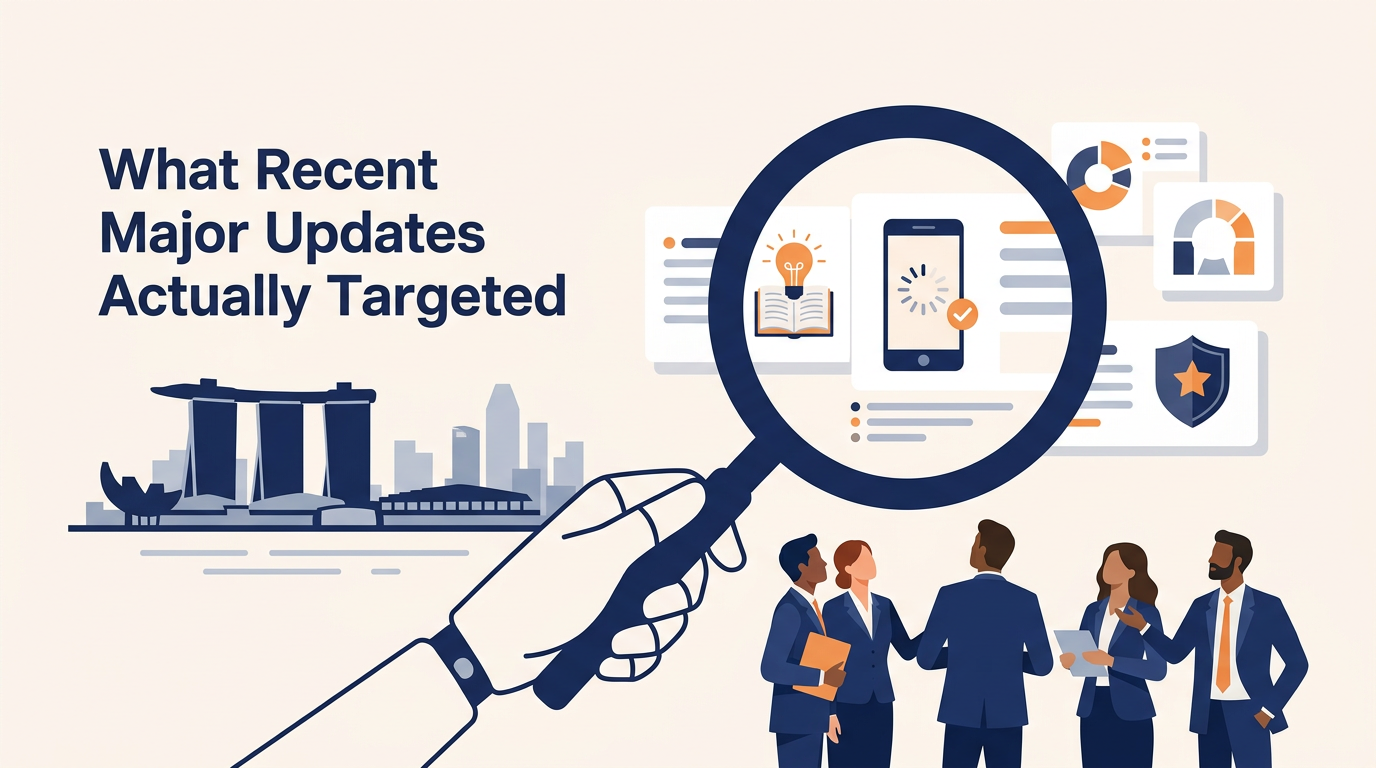
Helpful Content System (now integrated into Core Updates)
Targets: Generic content created primarily for search engines rather than genuine users. Templated content at scale without distinctive value. AI-generated content without substantive editorial work.
Indicators your site might be affected:
– Content appearing to match patterns that could have been written by anyone
– Heavy reliance on AI-generated content at scale
– Thin content without original perspective
– Content that doesn’t substantively answer user intent
– Disproportionate focus on ranking over usefulness
How to respond: Content quality audit — identify and either substantially improve or remove thin, generic content. Increase content depth, add genuine expertise and perspective, verify factual accuracy.
Core Updates
Targets: Broad quality recalibration. Core Updates reassess E-E-A-T signals, topical authority, content quality — producing ranking shifts across all categories.
Indicators your site might be affected:
– Traffic drops across multiple content types following Core Update
– Rankings drops for commercial keywords
– Competitors with higher authority gaining rankings at your expense
How to respond: Holistic quality improvement. Content depth, author credentials, external authority signals, technical foundations. No single fix — Core Updates reward fundamentally strong sites.
Spam Updates
Targets: Manipulative link schemes, doorway pages, purchased reviews, other black-hat tactics.
Indicators: Sudden severe ranking drops, often with manual action notifications.
How to respond: If manual action: investigate cause, disavow toxic links, submit reconsideration. If algorithmic: audit link profile, remove manipulative patterns, rebuild authority legitimately.
Site Reputation Abuse Updates
Targets: Sites hosting third-party content primarily to capture rankings (parasite SEO — established sites hosting unrelated commercial content for the authority transfer).
Indicators: Primarily affects sites engaging in this tactic; major publications selectively affected.
How to respond: If your site engages in this pattern, stop. If your site is affected, remove parasitic subdomains and affiliated third-party content.
How to Diagnose Algorithm Impact
Structured diagnostic approach when traffic drops:
Step 1: Confirm Algorithm Update Timing
- Check sites that track algorithm updates (Search Engine Journal, Search Engine Land)
- Correlate your traffic/ranking changes with update timing
- Clear correlation with major update = algorithmic cause
- Drift without update correlation = likely technical or competitive
Step 2: Identify Scope
- Which pages lost traffic (all, specific categories, specific content types)?
- Which keywords lost rankings?
- Pattern reveals what the update likely targeted
Step 3: Competitive Analysis
- What sites gained the rankings you lost?
- What do they have that you don’t?
- What quality signals differentiate them from you?
Step 4: Hypothesise Targeted Signals
Based on update analysis and competitive patterns:
– Content quality issue?
– EEAT deficiency?
– Technical issue?
– Link profile problem?
– Intent mismatch?
Step 5: Remediation
Based on hypothesis, implement specific fixes:
– Content quality: improve depth, add expertise, remove thin content
– EEAT: add credentials, implement author schema, build external authority
– Technical: audit and fix per Technical SEO Audit Singapore
– Links: audit, disavow toxic, rebuild authority
– Intent: refocus content on actual search intent patterns
Step 6: Recovery Timeline
Recovery typically takes 3-9 months, often requiring the next Core Update to fully reflect improvements. Patience required; sites that panic-revert changes rarely recover.
What Algorithm-Resistant SEO Looks Like
Strategies robust to algorithm evolution:

Quality over quantity content. Substantial depth, genuine expertise, original perspective. Sites with strong content consistently benefit from Core Updates rather than getting hurt.
Strong EEAT foundation. Visible credentialing, author profiles, external authority signals. Particularly important for YMYL categories.
Clean technical foundation. Core Web Vitals, schema, crawlability, mobile optimisation. Technical strength supports every ranking factor.
Legitimate authority building. Editorial backlinks through digital PR, not purchased links. See Digital PR Singapore.
Search intent precision. Content that actually answers what searchers want, not just targets keywords.
Topical authority architecture. Pillar/cluster content strategy building depth rather than superficial breadth.
Conservative on AI content. AI as drafting tool with substantive human editing. Not AI content at scale.
Sites with these foundations benefit from algorithm updates — Google continues rewarding what works fundamentally. Sites relying on shortcuts get hurt by each update.
Algorithm Updates in Singapore Context
Singapore-specific considerations:
Multilingual content updates. Updates affecting non-English content may specifically impact SG businesses with Mandarin/Malay/Tamil content. Monitor update guidance from Google’s international teams.
Local Pack updates. Local search algorithm updates affect Singapore local businesses specifically. Proximity, GBP health, and NAP consistency remain primary factors through updates.
APAC-specific rollout timing. Some updates roll out globally simultaneously; others stagger by region. Singapore typically gets updates close to global rollout.
Regulated vertical impact. Medical, financial, legal updates may have SG-specific effects given local regulatory frameworks.
Common Misconceptions About Algorithm Updates
“Algorithm updates are random.” They’re not. Updates have specific targets and patterns. Diagnosis reveals what was targeted; response can be strategic.
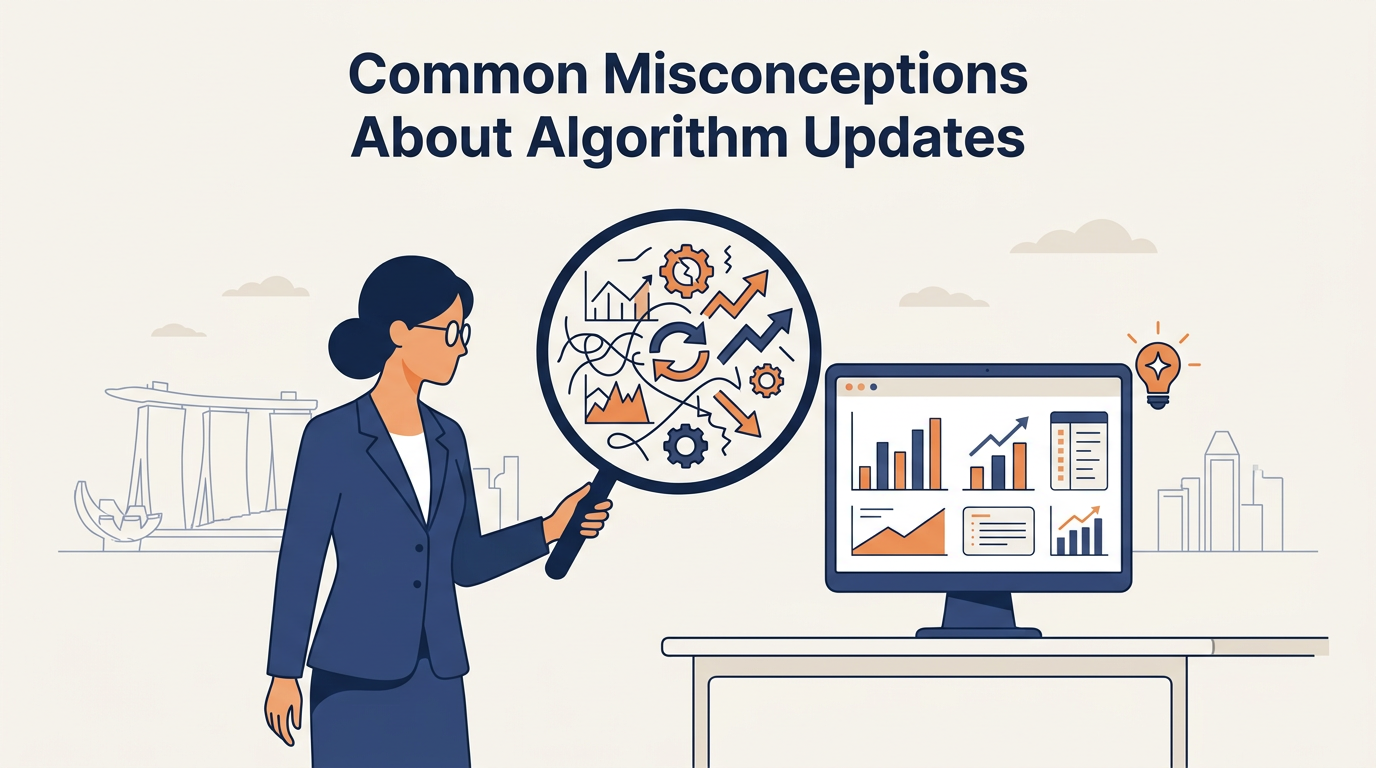
“Recovery is quick.” Usually it isn’t. Post-update recovery typically takes months, often requiring the next update cycle to fully reflect improvements.
“If I just wait, rankings will come back.” Sometimes yes (if the drop was temporary volatility); often no (if underlying quality signals need addressing). Diagnosis matters.
“All algorithm updates are bad for SEO.” No. Sites with strong fundamentals often benefit from major updates because competitors with weaker quality get hit harder.
“AI Overviews will replace organic search.” No. They’re augmenting, not replacing. Traditional organic search still drives the majority of organic traffic. See Complete Guide to SEO in Singapore for broader 2026 search reality.
FAQ — Google Algorithm Updates 2026
How often does Google update its algorithm?
Constantly. Major Core Updates 3-4 times per year. Minor unconfirmed updates near-continuously. Specific targeted updates (Helpful Content, Spam, Site Reputation) periodically throughout the year.
How do I know if an algorithm update affected my site?
Check timing — did traffic/ranking changes correlate with known update dates? Check scope — which content was affected? Check patterns — are there common characteristics among affected pages?
How long does algorithmic recovery take?
Typically 3-9 months, often requiring next Core Update cycle to fully reflect improvements.
Can I recover from a major algorithmic hit?
Yes, if you diagnose correctly and implement substantive fixes. Superficial changes rarely recover. Fundamental quality improvements can recover substantially over multiple update cycles.
Should I panic-revert changes after a ranking drop?
No. First diagnose whether the drop is algorithmic vs technical vs competitive. Panic reversions often make things worse.
How do I future-proof my SEO against algorithm updates?
Strong quality foundations — content depth, EEAT, technical strength, legitimate authority building. Sites with fundamentals benefit from updates rather than getting hurt.
What’s the biggest recent algorithm change?
AI Overviews rollout + Helpful Content integration into Core Updates + aggressive AI content deprioritisation represent the major 2024-2026 shift. Quality and EEAT signals matter more than ever.
Does Google announce algorithm updates?
Major Core Updates and specific targeted updates are announced. Minor updates are rolled out without announcement. Algorithm-tracking services (Search Engine Journal, Search Engine Land) document patterns.
Discuss Algorithm Impact or Strategy
If your Singapore site has been impacted by recent algorithm updates or you want to build SEO strategy robust to ongoing changes, reach out.

Book a free 30-minute consultation or email [email protected].
Related Reading
- Technical SEO Audit Singapore — technical diagnostics
- Core Web Vitals Singapore — mobile performance
- Complete Guide to SEO in Singapore — pillar overview
- SEO Consultancy Services — strategic advisory
- What Is AEO? — AI Overview context