A SaaS founder I spoke with last month had read three LinkedIn posts in a single morning. The first declared SEO dead and told him to pivot to AEO immediately. The second claimed GEO was the only thing that mattered now because ChatGPT had replaced Google for his buyers. The third — written by someone selling a SEO retainer — said the other two were wrong and traditional search was still 90% of the pie. He messaged me the obvious question: “Which one do I actually spend money on?”
This post is the honest answer. Not a neutral table comparison that leaves you exactly where you started, but a sequenced recommendation you can defend in a board meeting. We’ll define each discipline in one sentence, map where they genuinely overlap (it’s most of the work), where they diverge, and how to think about investment when your budget covers one retainer — not three.
If you’re running a Singapore business with SGD 4,000–15,000/month of consultancy budget to allocate, you almost certainly need SEO foundations first, AEO as a near-immediate extension, and GEO as a slower additive investment. The rest of this post explains why, and the narrow cases where that order flips.
What Each One Actually Means
Three-letter acronyms proliferate faster than the disciplines they describe. Strip the marketing noise and you get workable definitions.
SEO (Search Engine Optimisation) is the practice of earning visibility in ranked search results — the blue links on Google, Bing, or any traditional search interface. Authority, relevance, technical health, and content quality combine into a ranking. This has been the discipline’s core for 25 years.
AEO (Answer Engine Optimisation) is the practice of being included and cited in AI-generated answer surfaces — Google AI Overviews, Perplexity, Bing Copilot answers, ChatGPT search responses. Instead of earning a ranked link, you’re earning a citation inside a synthesised answer. Our AEO services page describes the tactical scope in more depth.
GEO (Generative Engine Optimisation) is the practice of influencing how large language models represent your brand in their training data and recommendations — so that when someone asks ChatGPT, Claude, or Gemini “what’s the best X in Singapore,” your brand surfaces. GEO overlaps with AEO but reaches further back, into corpus-level representation. The GEO services overview covers what that actually involves.
Three acronyms, three different surfaces. But the work underneath each one overlaps more than the vocabulary suggests.
Where They Genuinely Overlap (It’s Most of the Work)
If you imagine three Venn circles for SEO, AEO, and GEO, the shared middle is roughly 70–80% of the activity. Here’s what sits inside that overlap:
- Authority signals. Domain authority, brand mentions, high-quality inbound links, and cited expertise help all three. Google ranks you higher. Perplexity and AI Overviews cite higher-authority sources disproportionately. LLMs weigh authoritative domains more heavily in their training.
- EEAT (Experience, Expertise, Authoritativeness, Trust). Named authors with verifiable credentials, original first-party data, transparent ownership, real case studies. This signal set matters for every algorithm and every LLM.
- Content quality and depth. Thin content ranks poorly, gets cited rarely, and fails to make it into training data prominently. Substantive content with genuine expertise wins across the board.
- Structured data and schema. Article schema, FAQ schema, Organisation schema, Product schema — traditional SEO crawlers parse these, and so do the scrapers feeding AI answer systems.
- Technical foundations. Crawlability, site speed, clean HTML, semantic markup, XML sitemaps. An LLM scraper that can’t parse your site can’t represent you. A Google crawler that can’t render your page can’t rank you.
- Topical authority. Clusters of interlinked content covering a subject comprehensively benefit SEO rankings and AI citation likelihood simultaneously.
This is the practical reason “pivot to AEO and abandon SEO” is bad advice. You can’t build AEO on a weak SEO foundation any more than you can build a second floor without a ground floor. The overlap isn’t a coincidence — it’s the same underlying signal set read by different consumers.
Where They Actually Diverge
The remaining 20–30% is where the disciplines split, and it’s worth being specific:
SEO specifics — keyword research for specific query intent, ranking position tracking, SERP feature optimisation (featured snippets, image packs, local packs), backlink velocity and anchor diversification, traditional on-page optimisation against specific keywords. These remain SEO-native activities. The complete guide to SEO in Singapore covers the full tactical landscape.
AEO specifics — query fan-out analysis (understanding how an AI decomposes a user prompt into sub-questions), answer-format content structuring (direct answers in opening paragraphs, clear question headers), Perplexity source-pattern research, and monitoring citation frequency inside AI Overviews. The post on AI Overviews optimisation goes deeper on the answer-surface-specific tactics.
GEO specifics — brand representation in LLM responses to recommendation-style prompts (“best X for Y”), training-data presence via high-authority mentions on sources LLMs scrape heavily (Wikipedia, major publications, Reddit, Stack Overflow in relevant niches), structured brand narratives, and long-horizon digital PR aimed at shifting the LLM’s understanding of your category. The breakdown in generative engine optimisation services walks through the mechanics.
Three different surfaces, three different ranking-or-inclusion logics, but all feeding from the same authority and content substrate.
Honest Prioritisation: What to Sequence and Why
For almost every Singapore business entering 2026 with a finite budget, the sequence is this:
1. SEO foundation first. Traditional organic search still drives the majority of commercial discovery in most verticals. Google’s market share remains above 90% in Singapore. AI Overviews appear on roughly 15–30% of queries depending on category. Ranked blue links drive the other 70–85% of that query real estate, and the totality of non-AI-Overview queries remains the bulk of SERP impressions. If your SEO foundation is weak, no amount of AEO work compensates.
2. AEO as a natural extension. Once the SEO foundation exists — authoritative content, strong technical base, EEAT signals — AEO tactics layer on cheaply. Restructuring content for answer formats, adding targeted FAQ sections, tightening schema, and monitoring citation coverage add maybe 10–20% additional work on top of SEO. That’s not a new discipline; it’s a competent SEO practice adjusting to new surfaces.
3. GEO as long-horizon additive. GEO works, but the feedback loop is slow — months or quarters rather than weeks. Training data updates sporadically, LLM recommendation patterns shift gradually, and measurement is immature. It’s worth investing in for brands with long planning horizons and existing authority. For a startup trying to hit quarterly growth targets, it’s not the first dollar spent.
I’ll be blunt: “abandon SEO, pivot entirely to AEO” narratives are being pushed by consultants who either don’t have a mature SEO practice to offer or need a novel angle to sell. If you listen to them, you’ll spend 2026 ranking poorly in Google, citing poorly in AI Overviews (because those citations draw from your SEO authority), and showing up nowhere in ChatGPT recommendations.
The correct framing: SEO, AEO, and GEO are three surfaces that benefit from one unified authority-and-content strategy. You prioritise the surface with the biggest near-term return — SEO — and extend the same work into the adjacent surfaces.
When the Order Flips
A few edge cases genuinely justify a different sequence. I’ve seen maybe one in ten clients where this applies:
- Pure AI-native niche. If your product is an AI workflow tool and your buyers live in ChatGPT, Perplexity, and developer communities, GEO weight increases. SEO still matters, but the AI-surface ratio shifts higher.
- B2B with heavy Perplexity usage by buyers. Enterprise research teams in certain verticals (legal tech, research tools, certain SaaS categories) use Perplexity as a default research surface. AEO coverage matters earlier in the sequence.
- Pre-existing SEO dominance. If you already rank #1 for your core commercial terms and have diminishing returns on SEO investment, shifting incremental budget to AEO and GEO makes sense. This is a luxury problem.
- Launched brand with PR heat. If you’ve just secured major press coverage and have a window where LLM training data may capture your brand positioning, that’s a short-term GEO opportunity worth exploiting.
Outside these scenarios, the default sequence holds.
Measurement Realities You Should Factor In
Investment decisions should weight the confidence of measurement alongside the potential return. Here’s the honest state of play:
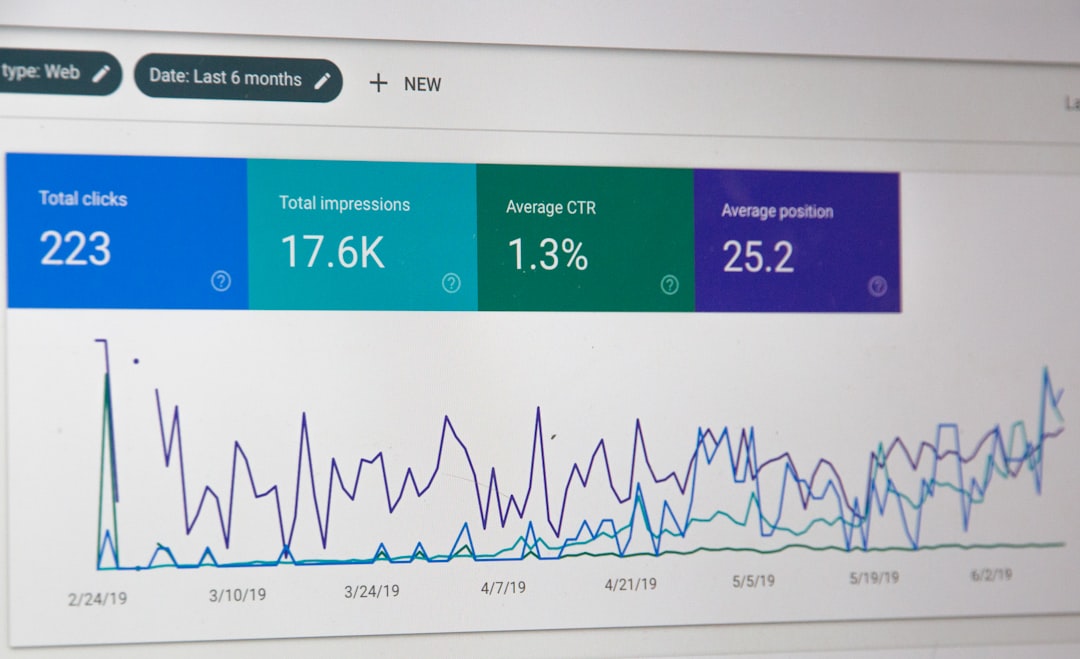
- SEO measurement is mature. Rankings, impressions, clicks, organic conversions, attribution models, tools like Search Console, Ahrefs, and Semrush. You can prove ROI with reasonable confidence.
- AEO measurement is immature. Google doesn’t report AI Overview citations in Search Console with any granularity. Perplexity provides no native analytics for site owners. You end up relying on manual monitoring, sampled queries, and third-party tools with limited accuracy. You can demonstrate presence and trajectory, but not clean attribution.
- GEO measurement is nascent. Tracking how often ChatGPT or Claude recommends your brand in response to a prompt requires sampling methodology — testing a prompt set at intervals and logging mentions. It’s directional, not definitive.
If you’re reporting to a finance-minded board, this measurement maturity gradient matters. Investing heavily in surfaces you can’t measure well makes the quarterly conversation awkward. Weight your mix accordingly.
Pricing Sanity Check — SGD
Most Singapore businesses ask this the wrong way: “How much does SEO cost? How much is AEO? How much is GEO?” The right question is: “How much is the integrated engagement, and what mix of activity does it include?”
- Foundational engagement (SEO-led, with AEO extension): SGD 4,000–6,000/month for small-to-mid businesses with focused commercial targets.
- Standard integrated retainer (SEO + AEO + light GEO): SGD 6,000–10,000/month covers most consultancy engagements across SaaS, e-commerce, and professional services.
- Enterprise or complex multi-market engagements: SGD 10,000–15,000/month where international SEO, multiple product lines, or deeper GEO investment is in scope.
- Project-based work (audits, migration, launch): SGD 5,000–35,000 depending on scope.
Separating the three as distinct line items usually makes the engagement more expensive without producing better outcomes, because the work genuinely overlaps. A single consultant or practice delivering the integrated strategy is more efficient than three vendors working in parallel. For deeper pricing context, see how much SEO costs in Singapore.
FAQ — AEO vs SEO vs GEO
Should I stop doing SEO?
No. Stopping SEO in 2026 is like stopping email marketing because social media exists. Traditional organic search still drives the majority of commercial discovery in most verticals, and AEO and GEO both draw on the same authority signals that SEO builds. Abandoning SEO would weaken the very foundation the newer disciplines depend on.
Is AEO a replacement for SEO?
It’s an extension, not a replacement. AEO tactics optimise the same content for a different consumer (AI answer systems instead of ranked-link SERPs). The underlying work — authoritative content, structured data, EEAT, technical health — is shared. Treating AEO as a separate replacement discipline usually produces worse results than treating it as a natural extension of competent SEO. The piece on what AEO actually is goes deeper on this distinction.
Which one should a new business start with?
SEO. A new business has no authority, no content, no technical foundation. You can’t optimise for AI citations when there’s nothing to cite. Build the SEO foundation for 6–12 months, add AEO tactics alongside from month three or four, and consider GEO investment once you have brand presence to protect. The SEO consultancy services page covers what an integrated early-stage engagement looks like.
Is GEO worth it for SMBs?
For most SGD 1M–10M revenue SMBs, GEO is a lower priority than SEO and AEO. The feedback loop is long, measurement is weak, and the return scales with brand mentions across high-authority corpora — which SMBs don’t usually have in volume. That said, SMBs with strong press coverage or niche dominance may find GEO investment rewarding earlier than peers.
How much overlap is there between the three?
Roughly 70–80% of the underlying work overlaps. Authority, content quality, EEAT, schema, technical health, topical depth — these feed all three surfaces simultaneously. The 20–30% that’s surface-specific matters, but the shared base is why sequencing SEO first makes sense. You’re not choosing between three disciplines; you’re choosing which surface to optimise for within a largely shared activity set.
Can one consultant do all three?
Yes, and in most cases should. The disciplines share enough methodology that separating them across three vendors creates coordination overhead and often duplicate work. A single experienced consultant with SEO fundamentals and updated AEO/GEO practice delivers more integrated value than a three-vendor stack. This is the model we run at Sovereign SEO.
What’s the biggest mistake I could make?
Two, really. First: abandoning SEO on the advice of a LinkedIn hot take and losing the foundation that AEO and GEO depend on. Second: buying three separate retainers for SEO, AEO, and GEO from different vendors — paying roughly triple for work that largely overlaps. Both mistakes are expensive, and both are driven by treating the acronyms as fully separate disciplines rather than adjacent surfaces with a shared substrate.
Do AI Overviews cannibalise traditional SEO traffic?
On queries where AI Overviews appear, click-through rates to ranked links drop — often by 20–40% depending on query type. But AI Overviews also disproportionately cite sources that already rank well traditionally. Strong SEO performance protects against cannibalisation (you’re likely to be cited inside the Overview) and captures remaining click traffic below. Weak SEO performance gets hit from both sides.
Discuss Your 2026 Search Strategy
If you’re weighing where to allocate your SEO, AEO, and GEO budget for 2026 and want a direct conversation about sequencing, reach out. No hard pitch — just an honest view of what your situation calls for.
Book a free 30-minute consultation or email [email protected].
Related Reading
- What Is AEO? — definition and tactical scope of Answer Engine Optimisation
- AI Overviews Optimisation — surface-specific tactics for Google’s AI answer panel
- Generative Engine Optimisation Services — deeper breakdown of GEO mechanics
- How Much Does SEO Cost in Singapore? — pricing context across engagement types
- Complete Guide to SEO in Singapore — pillar overview of the full SEO discipline
- SEO Consultancy Services — what an integrated SEO + AEO + GEO engagement looks like